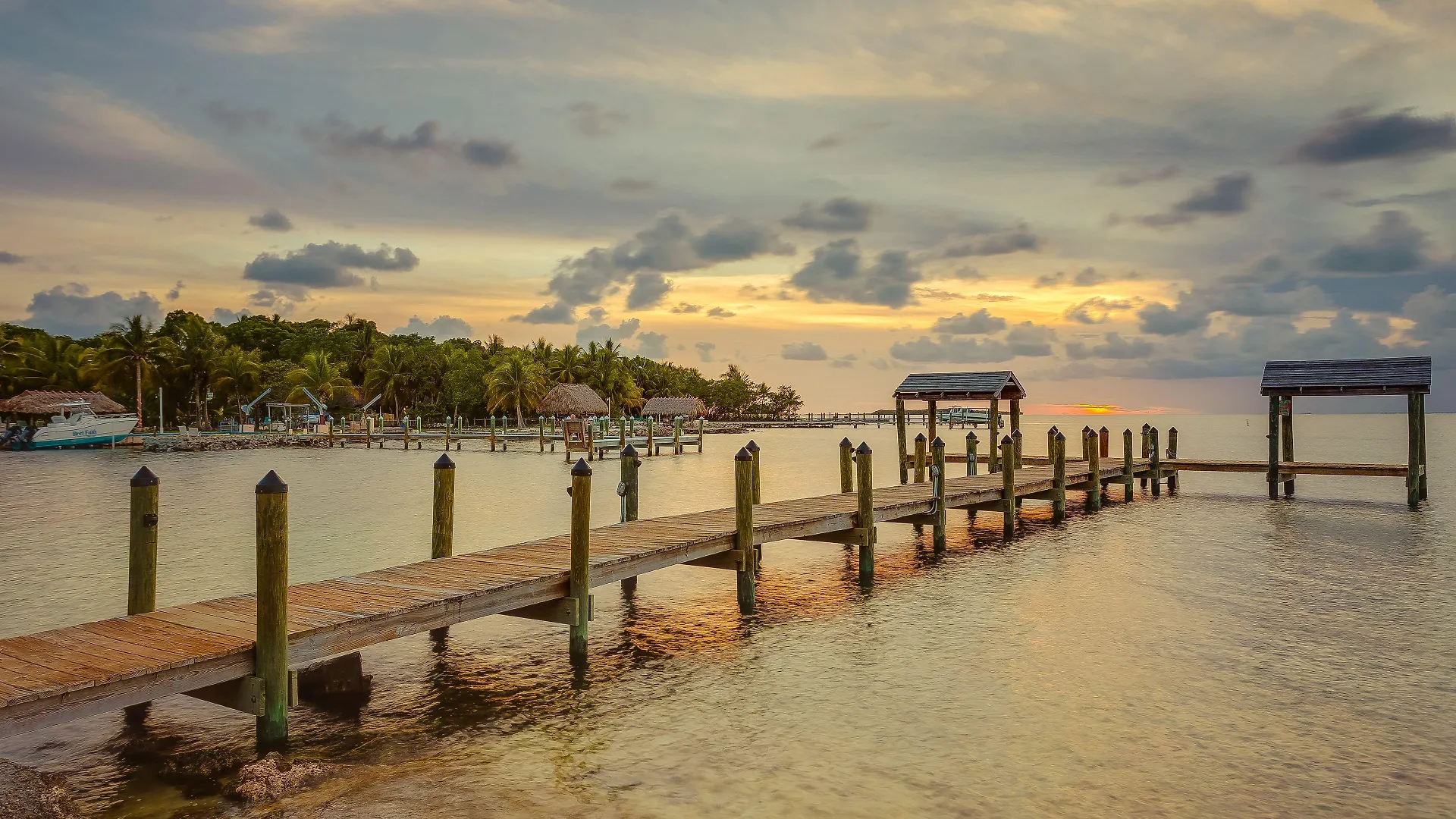
Key Largo is the first and most accessible island in the Florida Keys, sitting around 99 km south of Miami International Airport. Whether you're diving John Pennekamp Coral Reef State Park, kayaking through mangroves, or simply chasing a slower pace along the waterfront, finding an affordable base here is entirely possible - and the options are more strategic than most travelers expect.
What It's Like Staying in Key Largo
Key Largo runs along a single main corridor - US-1 (the Overseas Highway) - which means walkability between hotels and attractions is essentially non-existent without a car. You need a vehicle to move between snorkel tours, restaurants, and state parks. That said, the trade-off is real: staying here puts you within minutes of some of the best reef diving in North America, and the slower, nature-focused pace means less urban noise and more waterfront access than you'd find anywhere near Miami.
Crowd patterns are highly seasonal. The island gets noticeably quieter from mid-August through October, when humidity peaks and tropical storm risk rises. Families, divers, and couples looking for an outdoors-first trip benefit most from basing themselves here rather than driving up from Miami daily.
Pros:
- Direct access to John Pennekamp Coral Reef State Park, the only living coral reef park in the continental US
- Most budget hotels include free private parking, which is essential given the car-dependent layout
- Quieter atmosphere than Key West with significantly lower accommodation prices
Cons:
- No public transit worth relying on - a rental car is a near-mandatory expense
- Dining options cluster along US-1 and require driving; no walkable food scene from most hotels
- Peak season (December-April) can push even budget rates up sharply, limiting last-minute flexibility
Why Choose Budget Hotels in Key Largo
Budget hotels in Key Largo punch well above their price point compared to equivalent-tier properties in Miami Beach or Key West. Most offer free private parking, free WiFi, and direct or near-direct waterfront positioning - features that cost significantly more in denser markets. The 3-star tier here often includes private beach access and outdoor pools, which would typically sit in the mid-range bracket elsewhere in Florida.
Room sizes at budget properties on the island tend toward the compact side in motel-style units, though several properties offer kitchen-equipped rooms that help cut food costs on longer stays. The real trade-off is limited on-site dining and fewer concierge-level services - this is self-sufficient travel, not resort-style hospitality. For divers, snorkelers, and outdoor-focused travelers who spend most of the day off-property, that's rarely a problem.
Pros:
- Free private parking included at most budget properties - a meaningful saving when renting a car
- Several budget options sit directly on the water with private beach access, rare at this price tier
- Kitchen-equipped rooms available at select properties, reducing meal costs on multi-night stays
Cons:
- Limited or no on-site restaurant; guests rely on driving to nearby spots along US-1
- Motel-style layouts mean rooms can feel small, especially in peak season when upgrades are unavailable
- Fewer amenities than mid-range resorts; concierge services and daily housekeeping vary widely
Practical Booking & Area Strategy for Key Largo
Key Largo stretches along US-1 for roughly 50 kilometers, so where you position yourself on the island matters significantly. The northern end near MM 100 (mile marker 100) sits closest to the Card Sound Road entry from Florida City and offers quicker Miami airport access. The mid-island zone around MM 97-100, near Blackwater Sound and the John Pennekamp State Park entrance, is the sweet spot for most travelers - centrally placed between the park and the marina district, with several budget hotels offering waterfront positioning at this stretch.
John Pennekamp Coral Reef State Park at MM 102.5 is the anchor attraction, drawing snorkelers, glass-bottom boat tours, and kayak renters year-round. Dolphin Cove sits nearby at MM 102, and the African Queen Canal Tour launches from the Holiday Inn Marina at MM 100. Book at least 6 weeks ahead for stays between December and April - winter is peak season and budget rooms sell out faster than travelers expect. The late summer and fall window (August-October) is the quietest and cheapest period, though hurricane awareness is warranted.
Best Budget Stays in Key Largo
The following hotels represent the strongest budget options currently available in Key Largo, selected for their waterfront access, practical amenities, and value relative to location on the island.
-
1. Drift Hotel
Show on map


Just a few rooms left at the best rate!
fromUS$ 199
-
2. Azul Del Mar (Adults Only)
Show on map


Just a few rooms left at the best rate!
fromUS$ 151
-
3. Kona Kai Resort And Gallery (Adults Only)
Show on map


Hurry – almost gone at this price!
fromUS$ 604
-
4. Waterside Suites And Marina
Show on map


Rooms filling fast – secure the best rate!
fromUS$ 119
Smart Timing & Booking Advice for Key Largo
Key Largo has two clearly defined seasons that directly affect both availability and pricing at budget hotels. December through April is peak season - temperatures are mild, humidity is low, and the island draws snowbirds, divers, and families on spring break simultaneously. Budget rooms during this window can sell out weeks in advance, and last-minute availability often disappears entirely by late January. Book at least 6 weeks ahead for any stay between Christmas and Easter.
The summer period from June through July offers a middle ground - school holidays bring families, but the heat and humidity thin out some visitors. August through October is the quietest stretch, with meaningfully lower rates and near-empty reefs. Hurricane season runs June through November, peaking in September, so travelers visiting in fall should monitor forecasts and choose hotels with flexible cancellation policies. A stay of 3 nights is typically the minimum to justify the drive from Miami and make full use of water-based activities, though divers often extend to 5 nights to cover multiple reef sites at John Pennekamp.