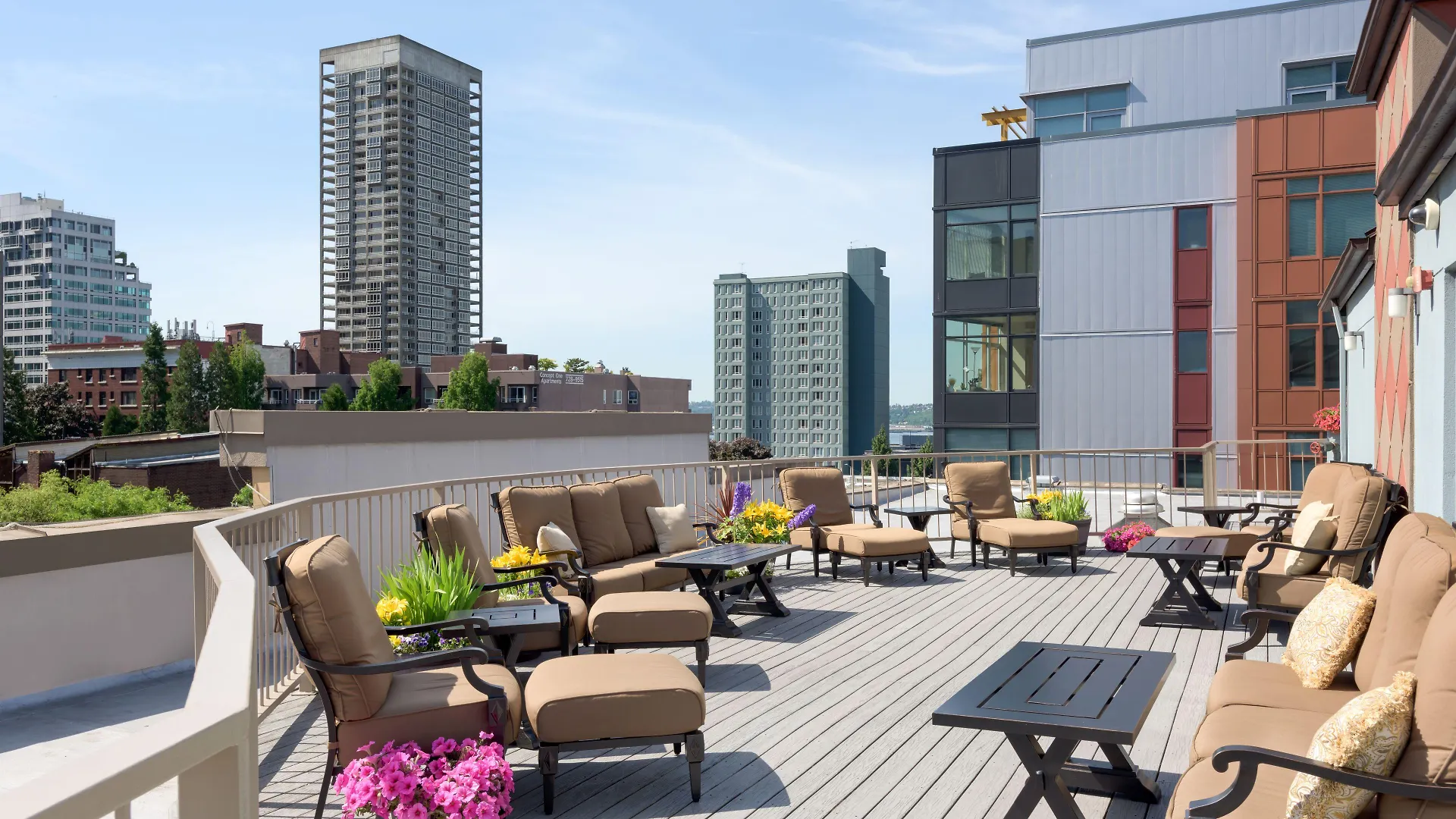
Seattle's Central Waterfront and downtown core is one of the most visually dynamic places to stay in the Pacific Northwest - where Elliott Bay views, Pike Place Market foot traffic, and a walkable grid of arts institutions create a genuinely stimulating urban backdrop. The design hotels in this area don't just respond to that context aesthetically; they position guests within walking distance of the Seattle Art Museum, the Olympic Sculpture Park, and the Ferry Terminal, while keeping connections to Capitol Hill and South Lake Union fast and simple. This guide covers 12 design-forward hotels across the downtown waterfront corridor, broken down by positioning, price tier, and what each property actually delivers beyond the lobby aesthetic.
What It's Like Staying in Seattle's Central Waterfront District
Staying in Seattle's Central Waterfront district means you are within a 10-minute walk of Pike Place Market, the Seattle Aquarium, and the Olympic Sculpture Park - a density of activity that few other Seattle neighborhoods can match on foot. The trade-off is real: 1st Avenue and Western Avenue see consistent foot traffic and delivery activity from early morning, and the Alaskan Way construction corridor has reshaped pedestrian flow along the waterfront itself in recent years. The Monorail stop at Westlake Center puts guests less than a 5-minute walk from most downtown hotels and connects directly to Seattle Center and the Space Needle, making it the fastest non-rideshare link for that route.
The downtown core here is best suited to travelers who want walkability over quiet - those who plan to spend evenings at restaurants on 2nd or 4th Avenue rather than returning to the hotel early. Belltown, immediately north, adds a denser bar and dining scene within a 10-minute walk, while Pioneer Square to the south offers an architecturally rich alternative for those willing to walk further. Noise from the downtown grid is a genuine consideration, particularly on rooms facing 4th or 5th Avenue, and it is worth filtering for upper-floor or courtyard-facing rooms when booking.
Pros:
- Walking access to Pike Place Market, Seattle Aquarium, and the waterfront ferry docks without needing transit
- Monorail at Westlake connects to Space Needle in minutes, avoiding traffic entirely
- High concentration of restaurants, coffee shops, and cultural institutions within a 15-minute radius on foot
Cons:
- Street noise on 4th and 5th Avenue is persistent, especially in lower-floor street-facing rooms
- Waterfront construction zones have disrupted some pedestrian routes along Alaskan Way
- Parking in the downtown core costs a premium and most hotels charge separately for it
Why Choose a Design Hotel in Seattle's Central Waterfront
Design hotels in Seattle's downtown waterfront corridor are not a uniform category - they span from Scandinavian-influenced boutique properties to art-integrated lifestyle hotels with in-room fitness kits and locally curated minibars. What they share is an intentional approach to interiors that sets them apart from the convention-oriented full-service hotels that dominate this part of the city. Room sizes in boutique design properties here tend to run smaller than at the large-chain convention hotels, but the trade-off is typically a more considered aesthetic, better coffee equipment, and design details that actually reflect Seattle's culture - think original Pacific Northwest artist photography rather than generic hospitality prints.
Price positioning for design hotels in this district sits above the budget tier but below the top-end convention chains; expect to pay around 20% more than a standard chain hotel for a comparable room night, with that premium reflected in curated amenities rather than square footage. The strongest argument for choosing a design-focused property here is context: you are staying in a city with a serious creative identity - Sub Pop Records, a thriving visual arts scene, and architecture ranging from 1920s brick to contemporary glass towers - and the better design hotels in this corridor actually connect to that identity rather than ignoring it.
Pros:
- Interiors reflect genuine Seattle cultural identity, not generic hospitality aesthetics
- Curated in-room amenities (local minibars, artist commissions, specialty coffee) justify the price premium
- Boutique scale means more responsive front desk service compared to large convention hotels
Cons:
- Smaller room footprints than full-service convention hotels at a similar price point
- Fewer on-site amenities such as pools or full-service spas compared to large chain competitors
- Some design hotels in the area do not offer on-site parking, requiring guests to use public garages
Practical Booking and Area Strategy for Seattle's Central Waterfront
The strongest micro-location within the downtown design hotel corridor is the stretch between Pike Street and Lenora Street, roughly from 2nd Avenue to 5th Avenue - this positions guests within a 6-minute walk of Pike Place Market's main entrance, a 10-minute walk to the waterfront ferry dock, and a 5-minute walk to the Westlake Monorail. Hotels on 4th and 5th Avenue benefit from proximity to the Washington State Convention Center and the light rail network at Westlake Station, which connects directly to Capitol Hill, the University District, and Sea-Tac Airport. Belltown-adjacent properties north of Pike Street on 1st or 2nd Avenue tend to offer slightly lower rates with faster walking access to the Olympic Sculpture Park and Myrtle Edwards Park along the waterfront.
Peak season in this corridor runs from late June through early September, when waterfront tourism, summer festival programming at Seattle Center, and convention business converge - booking at least 6 weeks ahead during this window is the practical baseline for securing preferred rooms at design properties. The Seattle Art Museum on 1st Avenue, the Chihuly Garden and Glass at Seattle Center, and the Pike Place Market itself are all reachable on foot from any hotel in this guide, which meaningfully reduces daily transport costs. Night-time atmosphere downtown is active but well-lit; Belltown sees a bar crowd late on weekends, while the waterfront itself quiets significantly after 9pm, making it a reasonable walk for those returning from evening events at the waterfront or Pier 66.
Best Value Design Stays
These properties deliver strong design credentials and genuine walkability in Seattle's downtown core at price points that make extended stays or last-minute bookings more viable than the premium tier.
-
1. Belltown Inn
Show on map


 Check-infrom 16:00 until 23:59Check-outuntil 11:00
Hurry – almost gone at this price!
fromUS$ 89
-
2. Best Western Plus Pioneer Square Hotel Downtown
Show on map


 Check-infrom 15:00 until 23:59Check-outfrom 04:00 until 11:00
Best price guarantee
fromUS$ 98
-
3. Ace Hotel Seattle
Show on map


 Check-infrom 15:00 until 20:00Check-outfrom 06:00 until 12:00
Rooms filling fast – secure the best rate!
fromUS$ 149
-
4. Executive Hotel Pacific
Show on map


 Check-infrom 16:00 until 23:59Check-outuntil 11:00
Just a few rooms left at the best rate!
fromUS$ 88
-
5. Staypineapple, Hotel Five, Downtown Seattle
Show on map


 Check-infrom 16:00 until 23:59Check-outuntil 12:00
Best price guarantee
fromUS$ 94
Best Mid-Range Design Picks
These properties step up in terms of design specificity, brand positioning, and on-site amenities while remaining accessible price points compared to the full-luxury tier in downtown Seattle.
-
6. Hotel Max
Show on map


 Check-infrom 16:00 until 23:59Check-outuntil 11:00
Just a few rooms left at the best rate!
fromUS$ 71
-
7. Hotel Theodore Seattle Downtown, Tapestry By Hilton
Show on map


 Check-infrom 16:00 until 23:59Check-outuntil 11:00
Best price guarantee
fromUS$ 119
-
8. Mayflower Park Hotel
Show on map


 Check-infrom 16:00 until 23:59Check-outuntil 12:00
Just a few rooms left at the best rate!
fromUS$ 119
Best Premium Design Stays
These properties operate at the upper end of the downtown waterfront design hotel market, with full-service amenities, elevated interiors, and brand-level positioning that justifies the higher nightly rate.
-
9. Aendra Hotel Seattle - Mgallery Collection
Show on map


 Check-infrom 16:00 until 23:59Check-outuntil 11:00
Hurry – almost gone at this price!
fromUS$ 270
-
10. Hilton Motif Seattle
Show on map


 Check-infrom 16:00 until 23:30Check-outuntil 11:00
Rooms filling fast – secure the best rate!
fromUS$ 135
-
11. The Westin Seattle
Show on map


 Check-infrom 16:00 until 23:59Check-outuntil 11:00
Hurry – almost gone at this price!
fromUS$ 152
-
12. Grand Hyatt Seattle
Show on map


 Check-infrom 16:00 until 23:59Check-outuntil 12:00
Best price guarantee
fromUS$ 170
Smart Timing and Booking Advice for Seattle's Central Waterfront
Seattle's downtown and Central Waterfront corridor sees its sharpest demand spike between late June and Labor Day weekend in early September, when summer weather reliably delivers the clear skies and mountain views that make the waterfront backdrop particularly compelling - hotel rates during this window run around 35% higher than the shoulder season average. The sweet spot for both pricing and atmosphere is May or late September, when the city is active, the waterfront is accessible, and convention-driven demand has not yet pushed rates to peak levels. Design hotels in this corridor tend to fill their better rooms - corner units, upper floors with views, rooms with kitchenettes - well ahead of standard room inventory, so booking those specific room categories at least 6 weeks ahead of a summer visit is worth the planning effort.
For stays tied to major events - Bumbershoot at Seattle Center in late summer, or large conventions at the Washington State Convention Center - last-minute availability in design properties is genuinely limited; the convention hotels absorb most overflow demand, and boutique design properties at those times will have filled preferred inventory entirely. A 3-night stay is generally the practical minimum for guests wanting to cover the waterfront, Pike Place, Capitol Hill, and the museum district without feeling rushed - 4 nights gives breathing room to add a Puget Sound ferry day trip to Bainbridge Island, which departs directly from the waterfront and requires no additional transport planning. January through March offers the lowest rates and smallest crowds, with the trade-off of persistent rain and limited daylight hours for outdoor waterfront activity.